Contents
- 1 Why Sensitive Teeth React to Whitening — and What You Can Do About It
- 2 What Causes Tooth Sensitivity?
- 3 How Teeth Whitening Works
- 4 Best Teeth Whitening Options for Sensitive Teeth
- 5 How to Prepare Your Teeth for Whitening
- 6 Managing Sensitivity During and After Whitening
- 7 What to Avoid: Whitening Methods That Worsen Sensitivity
- 8 How Long Do Whitening Results Last?
- 9 Frequently Asked Questions
- 10 Your Path to a Brighter, Comfortable Smile
Why Sensitive Teeth React to Whitening — and What You Can Do About It
You want a brighter smile, but every time you think about whitening your teeth, one concern stops you: sensitivity. If drinking cold water or biting into ice cream already makes you wince, the idea of applying a bleaching agent to your teeth can feel like a risk not worth taking.
Here is the good news. Tooth sensitivity does not automatically disqualify you from teeth whitening. If you want to whiten sensitive teeth, with the right approach, the right products, and guidance from your dentist, you can achieve a noticeably brighter smile without the sharp, shooting pain that many people fear.
At Marina Dental, we help patients with sensitive teeth whiten safely every week. This guide explains why sensitivity happens, which whitening methods are best suited for sensitive teeth, and how to protect your comfort throughout the process.
What Causes Tooth Sensitivity?
Tooth sensitivity — clinically known as dentin hypersensitivity — occurs when the protective enamel on your teeth becomes thin or worn, or when your gum line recedes to expose the underlying dentin layer. Dentin contains thousands of microscopic tubules that lead directly to the tooth’s nerve center (the pulp). When these tubules are exposed, temperature changes, acidic foods, and chemical stimuli like whitening agents can trigger a sharp, sudden pain.
Several factors contribute to enamel erosion and increased sensitivity:
- Aggressive brushing: Brushing too hard or using a hard-bristled toothbrush wears down enamel over time.
- Acidic foods and beverages: Citrus fruits, soda, wine, and coffee gradually erode enamel.
- Teeth grinding (bruxism): Chronic grinding wears down the biting surfaces of teeth and can cause micro-cracks in enamel.
- Gum recession: When gums pull away from teeth — often due to gum disease or aging — the root surface is exposed. Tooth roots are not covered by enamel, making them highly sensitive.
- Recent dental procedures: Teeth may be temporarily more sensitive after fillings, crowns, or professional cleanings.
Understanding why your teeth are sensitive is the first step toward choosing a whitening method that works with your teeth rather than against them.
How Teeth Whitening Works
According to the American Dental Association (ADA), all effective teeth whitening methods use one of two active bleaching agents: hydrogen peroxide or carbamide peroxide. These chemicals penetrate the enamel and break down the molecular bonds of stain compounds (called chromogens) trapped within the tooth structure.
The concentration of peroxide determines both the whitening power and the potential for sensitivity:
- In-office professional whitening: Uses hydrogen peroxide concentrations of 25 to 40 percent, delivering dramatic results in a single appointment.
- Take-home custom trays: Typically use 10 to 22 percent carbamide peroxide (equivalent to approximately 3 to 7 percent hydrogen peroxide), applied over one to two weeks.
- Over-the-counter strips and gels: Usually contain 3 to 10 percent hydrogen peroxide.
Higher concentrations work faster but increase the likelihood of sensitivity. For patients with already-sensitive teeth, the strategy is to use lower concentrations over a longer period, allowing the teeth to brighten gradually without overwhelming the nerve.
Best Teeth Whitening Options for Sensitive Teeth
1. Custom Take-Home Whitening Trays (Dentist-Supervised)
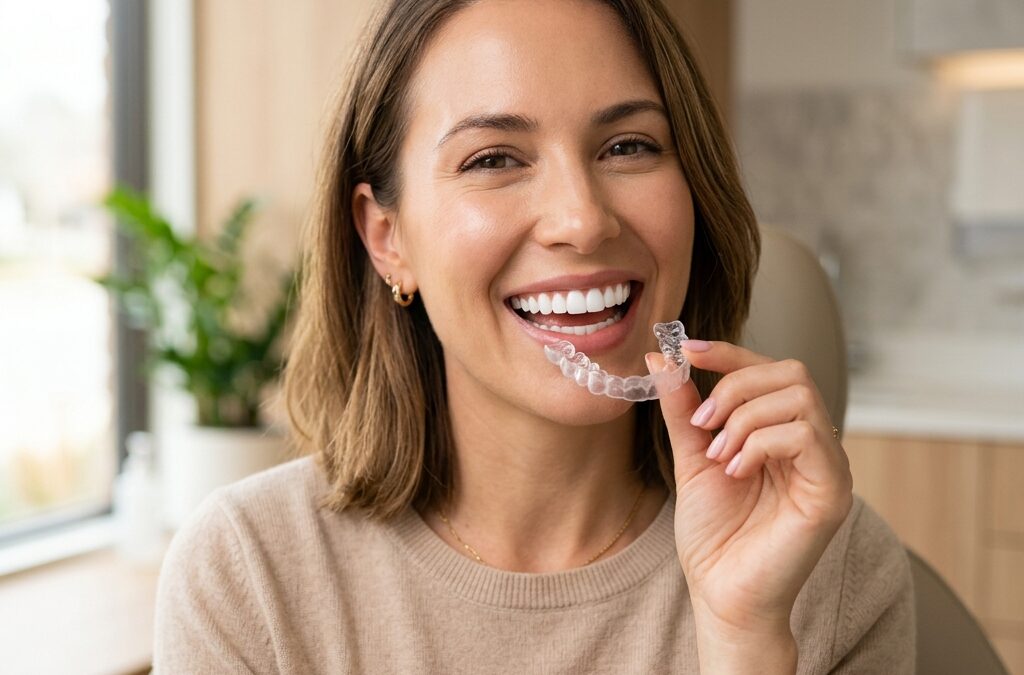
This is often the best option for patients with sensitive teeth. Your dentist takes impressions (or digital scans) of your teeth and fabricates custom-fitted trays that hold the whitening gel evenly against each tooth surface.
The advantages for sensitive teeth include:
- Lower peroxide concentration: Custom trays use a lower-strength gel (typically 10 to 15 percent carbamide peroxide), which is less likely to trigger sensitivity.
- Controlled contact time: Your dentist prescribes the exact duration — often 30 to 60 minutes per session — to minimize nerve irritation.
- Precise fit: Custom trays prevent the gel from contacting the gums, which reduces soft-tissue irritation.
- Gradual whitening: Over one to two weeks, teeth lighten by several shades without the intense sensitivity spike that can accompany a single high-concentration treatment.
2. In-Office Whitening with Sensitivity Protocol
Professional in-office whitening can still be an option for sensitive teeth when your dentist takes specific precautions. At Marina Dental, we customize the in-office experience for sensitive patients by:
- Applying a desensitizing gel containing potassium nitrate before the whitening procedure.
- Using a gum barrier to protect soft tissues from the whitening agent.
- Reducing the concentration of hydrogen peroxide and adjusting the application time.
- Applying fluoride varnish after the procedure to remineralize enamel and seal dentinal tubules.
This tailored approach delivers noticeable results in approximately one hour while keeping discomfort to a minimum.
3. Whitening Toothpaste for Sensitive Teeth
For patients who want a very gradual improvement with minimal risk of sensitivity, whitening toothpastes formulated for sensitive teeth can be a starting point. These products combine mild abrasives and low-concentration peroxide with desensitizing agents like potassium nitrate or stannous fluoride.
Whitening toothpaste will not produce the same level of whitening as professional treatments — typically lightening teeth by one to two shades over several weeks — but it is the gentlest approach available and works well as a maintenance tool between professional whitening sessions.
4. Sensitivity-Friendly Whitening Strips
Several over-the-counter whitening strip brands now offer formulations specifically designed for sensitive teeth. These strips use lower hydrogen peroxide concentrations (around 3 to 6 percent) and shorter recommended wear times (5 to 30 minutes instead of 30 to 60 minutes).
While convenient, over-the-counter strips have limitations. The one-size-fits-all design may not conform perfectly to your teeth, potentially causing uneven whitening or gel contact with gum tissue. For best results and safety, consult your dentist before starting any whitening regimen.
How to Prepare Your Teeth for Whitening
If you have sensitive teeth and plan to whiten, taking a few preparatory steps can significantly reduce discomfort during and after the process.
Switch to a Desensitizing Toothpaste Two Weeks Early
Toothpastes containing potassium nitrate work by blocking the nerve signals in the dentinal tubules. Using one for at least two weeks before your whitening treatment builds up a protective effect that reduces sensitivity during the procedure.
Get a Dental Check-Up First
Whitening is most effective and comfortable on healthy teeth. Cavities, cracked teeth, or active gum disease can intensify pain during whitening and may lead to complications. A dental examination ensures that any underlying issues are addressed before you start whitening.
Avoid Acidic Foods Before Treatment
Acidic foods and drinks temporarily soften enamel. Avoiding citrus, soda, and vinegar-based foods for 24 to 48 hours before whitening helps ensure your enamel is as resilient as possible when the peroxide is applied.
Stay Hydrated
A dry mouth concentrates acids and reduces the protective effect of saliva. Drinking plenty of water in the days leading up to whitening supports a healthy oral environment.
Managing Sensitivity During and After Whitening
Even with preparation, some degree of temporary sensitivity is common after whitening. Here are proven strategies to manage it:
- Use desensitizing gel in your trays: Your dentist can provide a desensitizing gel (containing potassium nitrate or fluoride) to apply in your custom trays for 15 to 30 minutes after each whitening session.
- Avoid very hot or cold foods: For 24 to 48 hours after whitening, stick to room-temperature foods and drinks to avoid triggering sensitivity.
- Use a soft-bristled toothbrush: Gentle brushing minimizes further enamel irritation during the whitening period.
- Take breaks between sessions: If using take-home trays and sensitivity becomes uncomfortable, skip a day between applications. The whitening results are cumulative, and taking a break does not erase your progress.
- Over-the-counter pain relief: An anti-inflammatory such as ibuprofen can help if sensitivity is bothersome after a session.
What to Avoid: Whitening Methods That Worsen Sensitivity
Not every whitening method is appropriate for sensitive teeth. Avoid these approaches:
- High-concentration over-the-counter gels without dental supervision: Some products marketed online contain peroxide concentrations that exceed safe limits for home use and can cause chemical burns to gums and severe tooth sensitivity.
- Charcoal-based whitening products: Activated charcoal is highly abrasive and can strip enamel, worsening sensitivity without delivering meaningful long-term whitening.
- Baking soda scrubs: While baking soda is a mild abrasive that can remove surface stains, frequent use can erode enamel, particularly on already-sensitive teeth.
- DIY lemon juice or apple cider vinegar treatments: These acids dissolve enamel. Despite their popularity on social media, they cause permanent damage and should never be used for whitening.
How Long Do Whitening Results Last?
Professional teeth whitening results typically last one to three years, depending on your diet, oral hygiene, and lifestyle habits. The most common causes of restaining include:
- Coffee, tea, and red wine
- Tobacco use
- Deeply pigmented foods like berries, tomato sauce, and curry
To extend your results, rinse with water after consuming staining beverages, use a whitening toothpaste for maintenance, and schedule periodic touch-up treatments with your dentist. Most patients at Marina Dental schedule a touch-up session every 12 to 18 months to maintain their results.
Frequently Asked Questions
Can teeth whitening damage enamel?
When performed correctly and at appropriate concentrations, professional teeth whitening does not damage enamel. Studies have consistently shown that peroxide-based whitening agents used as directed are safe for tooth structure. The risk increases only with misuse — applying too-high concentrations for too-long durations without dental supervision.
Is professional whitening worth it if I have sensitive teeth?
Yes, because professional whitening gives your dentist control over every variable — concentration, application time, desensitizing agents, and follow-up care. This supervision significantly reduces the risk of sensitivity compared to guessing with over-the-counter products.
How white can my teeth realistically get?
Most patients achieve a improvement of three to eight shades, depending on the type and severity of staining. Extrinsic stains (from food, drink, and tobacco) respond best to whitening. Intrinsic stains (from medication, fluorosis, or trauma) may require veneers or bonding for the best cosmetic result.
Can I whiten my teeth if I have dental crowns or veneers?
Whitening agents only work on natural tooth structure. Crowns, veneers, and fillings will not change color. If you have restorations on visible teeth, your dentist can help you develop a whitening plan that achieves a consistent shade match across all your teeth.
How soon after a dental cleaning can I whiten my teeth?
It is safe to whiten immediately after a professional cleaning, and many patients prefer to do so because freshly cleaned teeth allow the whitening agent to penetrate more evenly. However, if your teeth feel sensitive after the cleaning, waiting a few days is perfectly fine.
Your Path to a Brighter, Comfortable Smile
Tooth sensitivity does not mean you have to settle for a smile that is less bright than you want. With the right approach — lower concentrations, custom-fitted trays, proper preparation, and professional guidance — you can whiten your teeth comfortably and safely.
The key is working with a dentist who understands sensitivity and can tailor the treatment to your teeth. At Marina Dental, we have helped hundreds of patients with sensitive teeth achieve the whiter smile they wanted, without the discomfort they feared.
Ready to brighten your smile safely? Book a whitening consultation at Marina Dental and let us create a sensitivity-friendly whitening plan designed specifically for your teeth.